
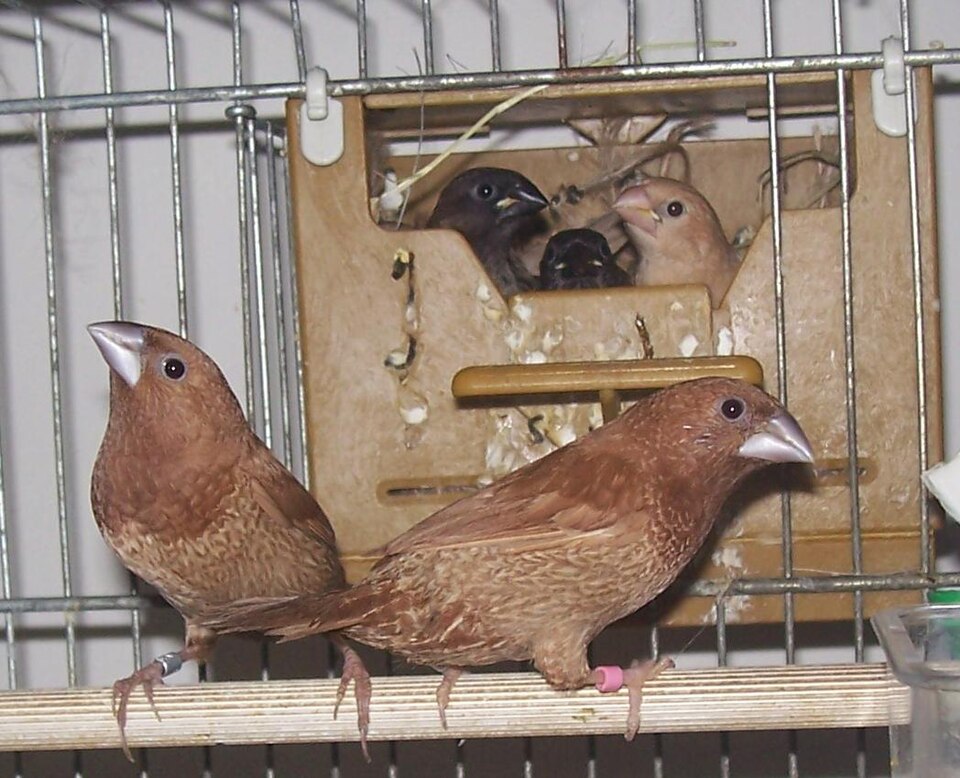
If you love watching active, colorful birds flit among branches while listening to gentle songs—without needing the constant hands-on attention a large parrot demands—pet finches are extraordinary companions. Unlike parrots, most finches are hands-off observational pets that thrive on companionship with their own kind.
Best Beginner Finches: Which Species Fits You?
- Society Finch (Best Gentle All-Rounder): Calm, forgiving, wonderfully social, and quiet enough for apartments. Two or three Society Finches will happily preen and roost together.
- Zebra Finch (Most Active & Iconic): Bold, comical, hardy, and filled with cheerful "meep-meep" chatter. Great starter birds—just remember they can get bossy toward shyer waxbills in tight quarters.
- Owl Finch (Charming Miniatures): Gentle and curious little Australian finches that look like pocket-sized owls and mix easily with Society and Star Finches.
- Gouldian Finch (Stunning Intermediate Favorite): Unmatched rainbow colors and soft voices; slightly more sensitive to drafts and abrupt cold spells than Zebras, making San Diego's mild coastal climate ideal!
Cage Size & Setup: Width Matters Most
Skip tall, narrow decorative "Victorian" round cages. Finches fly horizontally from end to end, so a 30-inch-wide flight cage is the sensible minimum for a single pair of small finches (and 36+ inches is far better).
- Bar spacing: Keep spacing at 3/8 inch to 1/2 inch (10–12 mm) max so tiny waxbills or juveniles cannot squeeze through or get stuck.
- Perches: Place natural wood branches (such as clean manzanita, apple, or eucalyptus) at each end—leaving the middle wide open for uninterrupted flight. Avoid sandpaper perch covers, which irritate delicate feet.
- Bathing: Finches adore bathing! Clip on a shallow splash bath every morning and remove it by afternoon so water stays fresh.
Social Rules: Keeping a Peaceful Flock
Never keep a single finch completely isolated—they are deeply social flock birds. Follow two golden rules:
- Avoid two pairs in one medium cage: Three pairs (6 birds) or one single pair (2 birds) are usually much calmer than two pairs (4 birds), where one dominant pair tends to endlessly chase the other.
- Match temperaments: Keep peaceful birds (Society, Owl, Star, Gouldian, Spice) together and avoid crowding assertive Zebra Finches or Cut-throat Finches with timid waxbills unless housed in a spacious planted aviary.
When Do Finches Lay Eggs?
Wait—do you actually want baby finches? Many new owners are surprised when a pair lays eggs within weeks! Domestic Zebra and Society Finches breed opportunistically whenever daylight exceeds 11–12 hours and a nest basket is present. Most species reach breeding maturity around 4 to 9 months old (Wait until 9–12 months before allowing Gouldians or Zebras to breed so young hens are fully grown).
If you do NOT want chicks: Simply leave nests out of the cage! Finches sleep comfortably on high branches and don't need a nest box unless actively raising young.
San Diego Outdoor Aviary Tip
Southern California's mild temperatures let many FSSDC members keep stunning planted outdoor aviaries year-round. Just guard against four local hazards: coastal wind/winter dampness (wrap two sides of the flight), night predators like raccoons and owls (use 1/2-inch × 1/2-inch welded wire mesh), Argentine ants, and curious Cooper's hawks perching on top wire.
Ready to Take the Next Step?
Explore all 25 Finch Species Profiles, read our Finch Nutrition Guide, or join us at our next Vista club meeting to chat face-to-face with Southern California aviculturists and view member-bred birds.